|
EXPERIENCE DETROIT
Attractions
& Self-Guided Tours
|

|
|
|
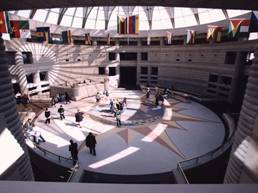 African American
Heritage African American
Heritage
Day Tour 1: Detroit Attractions
Tour Overview
From the anti-slavery
movement of the 1800s, to the civil rights unrest of the 1960s, to the development
of new musical genres, Detroit's African American heritage is full of
significant and influential people, places, and events. It is a rich heritage that continues
today. The sites and attractions below
will open your eyes to the impact of African Americans on Detroit, as well as
the impact of Detroit on African Americans.
|
|
|
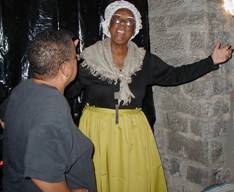 First
Congregational Church of Detroit [A] First
Congregational Church of Detroit [A]
33 East Forest
Avenue, Detroit
Website
Detroit played a crucial
role in the Underground Railroad as the last stop in a long journey for
fugitive slaves before crossing the river to Canada and freedom. At the forefront of the national anti-slavery
movement was the First Congregational Church. Visitors to this beautiful church can take
part in an Underground Railroad Flight to Freedom Program Tour, a
re-enactment of slaves escaping the south (call ahead for reservations). On your way to First Congregational Church,
you will pass Second
Baptist Church, another Underground Railroad and anti-slavery
historic landmark. From 1836 to 1865,
Second Baptist received over 5,000 fugitive slaves who were given food,
clothing, and shelter on their way to freedom in Canada. It is
also here that in 1859 Abolitionist Frederick Douglass spoke minutes before a
meeting with Revolutionary John Brown in a Detroit home to plan methods of
freeing slaves.
|
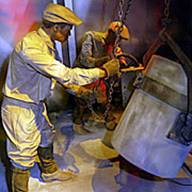 Charles
H. Wright Museum of African American History [B] Charles
H. Wright Museum of African American History [B]
315 East
Warren, Detroit
Website
Dr. Charles
Wright, a Detroit obstetrician and gynecologist, established the City's first
International Afro-American Musuem in 1965.
Three decades and three addresses later, a new Museum of African
American History was opened in the heart of Detroit's Cultural Center. The 120,000 square foot, state-of-the-art facility
is considered one of the largest African American history museums in the
world. The buidling house a core
exhibition called And Still We Rise which takes visitors on a journey through
3.5 million years of courage, deterimination, ingenuity, and spriitual energy
of African Americans as they pursued emancipation and full rights of
citizenship. In addition to And Still
We Rise, the museum showcases a number of other interesting limited-run
exhibittions.
|
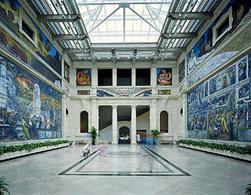 Detroit
Institute of Arts [C] Detroit
Institute of Arts [C]
5200 Woodward
Avenue, Detroit
Website
The DIA has been a hallmark
of Detroit culture since its founding in 1885. The museum covers over 600,000 square feet
and houses one of the largest and most diverse collections of multicultural
art in the United States. The museum's
extensive collection of African American art includes works by Romare Bearden and Detroiter Charles McGee. To top it
off, visitors are treated to Mexican artist Diego Rivera's Detroit Industry
fresco cycle, considered Rivera's most important work in the U.S. Rivera painted 27 fresco panels, many of
them modeled after the Ford Rouge
Plant, on the walls of the large garden court inside the DIA.
|
 Motown
Historical Museum [D] Motown
Historical Museum [D]
2648 West
Grand Boulevard, Detroit
Website
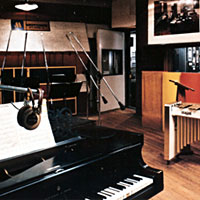
In 1959, upstart African American
songwriter and record producer Berry Gordy Jr. purchased a humble two story
home in Detroit, moving his family into one half and setting up a studio in
the other. He christened it "Hitsville U.S.A." and from this building grew Motown
from a startup business to what became by the mid-70s the largest independent
record company in the world. The
Motown Historical Museum includes models of eight houses on West Grand
Boulevard acquired by the company to house its growing operations until it
moved its offices to a high-rise in downtown Detroit in 1968. Among the many displays, visitors are
treated to a tour of the studio where Motown greats such as Martha Reeves and the Vandellas, Marvin Gaye, Stevie Wonder, Smokey Robinson
and the Miracles, the Temptations, the Four Tops, Gladys Knight and the Pips,
Diana Ross and the Supremes, and the Jackson Five actually recorded their
hits.
|
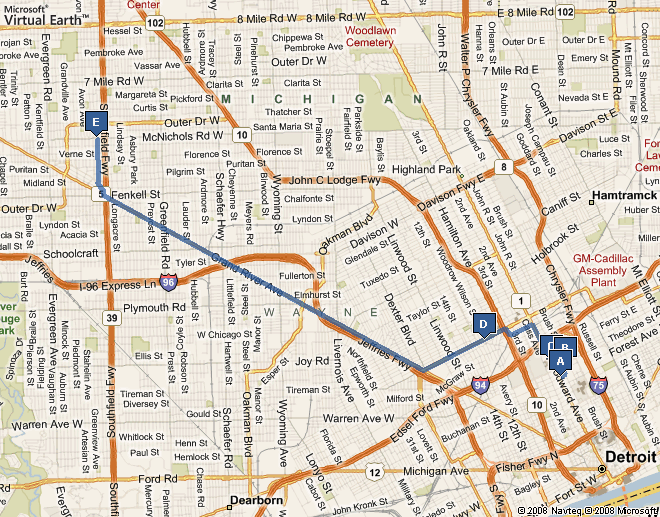
Tour
Map
Number of Destinations: 4
Overall Tour Time:
1 day
|
Extended Tour -- International Gospel Music Hall of Fame &
Museum [E]
18301 West McNichols, Detroit
Website
 We can assure you that squeezing the above
attractions into one day will be quite a challenge. However, if you are unable to arrange an
Underground Railroad Tour at First Congregational, or you decide to bypass
one of the other attractions, a visit to the International Gospel Music Hall
of Fame & Museum would be a great substitute. Founded in 1995 as a non-profit
organization by DoRohn Entertainment's president
and gospel artist David Gough, the International Gospel Music Hall of Fame
and Museum preserves and celebrates the work of the world's
legendary and influential gospel music artists and entertainers. The museum
is housed in the DoRohn Entertainment studios and
is open for tours by appointment, so call ahead. Your visit will be worthwhile. The museum includes a collection of
recordings, documents, photographs and memorabilia from gospel music legends past and present. In addition, you will get to experience a
recording session in a real studio. Choose
gospel songs from an extensive list of sound tracks, record your voice over
the track, and even have a CD burned of your session! We can assure you that squeezing the above
attractions into one day will be quite a challenge. However, if you are unable to arrange an
Underground Railroad Tour at First Congregational, or you decide to bypass
one of the other attractions, a visit to the International Gospel Music Hall
of Fame & Museum would be a great substitute. Founded in 1995 as a non-profit
organization by DoRohn Entertainment's president
and gospel artist David Gough, the International Gospel Music Hall of Fame
and Museum preserves and celebrates the work of the world's
legendary and influential gospel music artists and entertainers. The museum
is housed in the DoRohn Entertainment studios and
is open for tours by appointment, so call ahead. Your visit will be worthwhile. The museum includes a collection of
recordings, documents, photographs and memorabilia from gospel music legends past and present. In addition, you will get to experience a
recording session in a real studio. Choose
gospel songs from an extensive list of sound tracks, record your voice over
the track, and even have a CD burned of your session!
|
|

Click
Me to Rent a Car!!!
|
Related
Tours
African American Heritage
Day Tour 2: Windsor Attractions
African American Heritage Day
Tour 3: The Henry Ford
Cultural Center
Downtown Detroit
Historic Hines Drive
Museums
Music Heritage
Windsor Tour
|
Resources
& Links
Detroit Repertory Theatre
Second Baptist Church
|
|
|
|
Back to Top
African American Heritage Tours
Main Page
Home
Page
|
|
|
|
|